Showing posts with label fun on a budget. Show all posts

Tuesday, July 27, 2010

WGN-TV Appearance– Parenting on a Budget

The healthy choice can also be the affordable choice. This week I was a guest on WGN-TV's Midday News to discuss parenting on a budget; you can view the clip here:


I prepared some notes in advance of the segment that I'd like to share with blog readers:


Each year, the USDA studies how much families are spending to raise their kids. The latest report was released June 2010, and states that the average middle-income American family spends about $220,000 to raise a child from birth to 18. That is a scary number, but that doesn't have to be your number.


The good news is that parents have the power to make healthy choices that are also budget-friendly. Every family has its own unique financial situation, but these are some tips we can all use:


· Keep it simple; a child's best "toy" is a parent. Remember that good parenting isn’t about stuff or things– a good parent provides love, safety, and security. Babies in particular need interaction with caregivers: eye contact, talking, singing, reading books. Sometimes the best toys are not toys at all– in a young child's eyes, an empty cardboard box can be a car, a plane, or limitless other creative expressions.


· Be a conscious consumer. Shop the sales and compare prices. Connect with others (in real life or via online social networking) to get the scoop on coupon deals and where the sales are. There are some savvy shoppers in my Mothers of Twins club who generously share their good tips on couponing or online restaurant gift card deals to the rest of us less-experienced folks.

When grocery shopping, shop the perimeter of the store. The center aisles are typically stocked with prepackaged, processed foods that are unhealthy and more expensive. Shopping the perimeter for simple fruits, veggies, or dairy, for example means your family will be eating more healthfully as well as saving money.

A lot of us are looking into organic foods these days, but they can be more expensive than conventionally grown foods. Families can spend their money selectively on types of produce that are more susceptible to pesticide residue (the so-called “dirty dozen”), such as peaches and apples. Conversely, bananas are a type of produce that is not as susceptible to pesticide residue, so you can save your money by buying conventionally-grown bananas, and feel good about your decision.

Along these same lines, more families are looking for natural skin care products for their kids that are free of parabens, phthalates, and formaldehyde, but typically these can be expensive as well. More interest from families is creating more options. The Safety 1st company has a new Naturals skincare line– it's a good example of a safe ingredient list that is more affordable than comparable products.

Families also spend a lot on health care. If you need prescriptions, chain drugstores such as Target, Walmart, and Walgreens have various generic prescription plans that average about $4 a month.


· Be selective and buy only what you truly need. This is of special importance to new parents. Talk to other moms and dads and find out what they found most helpful, and what items they could have done without. You can borrow items or buy secondhand, making sure the items meet current safety standards. For those of us with multiples, take note: Mothers of Multiples clubs usually hold resales twice a year (and are usually open to the general public, regardless of how many kids you have!). Look to the future and repurpose items as well- instead of buying a changing table, use a dresser instead with an attached changing pad on top that can be removed later.


· Breastfeeding is both economical and healthy. This is a "win-win"- breast milk is the optimal nutrition for babies in the first year of life, and it is also affordable. Formula costs about $2000 per baby per year, depending on the type and brand. Breastmilk also contains immunologic factors that help prevent infections and illness, so you're saving money 2 ways- by not buying formula, and by not acquiring costs through illness or missed days at work.


· Avoid overscheduling. Besides saving money, kids need "free time" to play, boost creativity, problem solve, share, and socially interact with others. Camps and activities are great, but their cost adds up quick, especially for multiple children. Get creative and hold your own summer camp, and limit each child to their favorite 2 activities. Each town has comparable resources, but here in Chicago, Chicago Parent magazine lists free and low-cost family fun ideas. Look into your community park district and your public library for more free or low-cost activities.


· Cook at home as much as possible. Consider restaurant meals (including takeout) as a “once in a while” treat. Cooking at home saves money and is much healthier; restaurants meals are notorious for overly-large portions and being high in fat and salt. If both parents work outside of the home, plan ahead by prepping meals and freezing in advance, or having prepped ingredients ready to go for quick assembly at mealtime. Start a garden! You can teach kids about where their food comes from, and perhaps even nudge a "picky" eater with the temptations of vegetables grown before their very eyes.


· Focus on your family’s situation. This is a mental tip to stay focused, because so much of budgeting is psychology. Budgeting is about prioritizing and balance, and every family has their own unique situation. If you see friends or neighbors spending on a splurge, you aren't seeing where they are cutting back elsewhere to make that treat financially possible, or if they are in debt. Focus on your own situation.


· Budget-friendly vacations. Unstructured bonding time as a family is important and can be affordable. Airfare for a family adds up fast- consider destinations that are easily reached by car within a day, or be a tourist in your own town.


There is so much more to say about saving money while raising a family; feel free to share your tips in the comments below.


Thursday, May 6, 2010

A Budget Friendly Summer


These days, a family is considered “large” with more than 2 kids, so those of us parenting multiples as well as siblings automatically fall into this group. Day-to-day, I don’t consider our family of 6 particularly big, since it is our personal version of “normal,” however I can’t help but notice the costs adding up when we buy tickets for an event, museum visit, or airfare.

This past week we took advantage of early bird rates for a summer family membership at a nearby community pool. The school year can be hectic, so we’re looking forward to a loosely scheduled summer vacation– the pool will be a nice option for those pleasant lazy days when nothing in particular is on the calendar. Signing up, I did have a bit of initial sticker shock, but when you calculate the cost of admission for 6 for 2 or more visits, the numbers work out similarly; any subsequent visits over the year’s time are “free.” Memberships are available for your area’s museums, zoos, aquariums, and more– do the math, and you might find it’ll save your family some money too.

Another benefit of the up-front investment of a membership is that you won’t feel stressed to visit all the exhibits in a single day– you can pick and choose a few animals to visit at the zoo, for example, then see the rest during a future visit. This is particularly handy when you have toddler twins– too much action packed into one day can be over-stimulating, and a crew with young kids will need to head home for naptime at some point. Many museums have reciprocal partnerships with other cities’ attractions, so you can even take advantage of discounts if you’re hitting the road this summer.

We parents play many roles for our kids: caregiver, teacher, personal chef, etiquette instructor, medic, and more. In the summer, add “cruise director” to the list, planning outings and social meet-ups with friends. Having a couple memberships on hand means not having to think too hard for activity ideas; pack up a homemade lunch for your crew, and you’ve got an affordable, low-stress, fun, and educational activity for the day.


Wednesday, April 14, 2010

Keep it Fresh


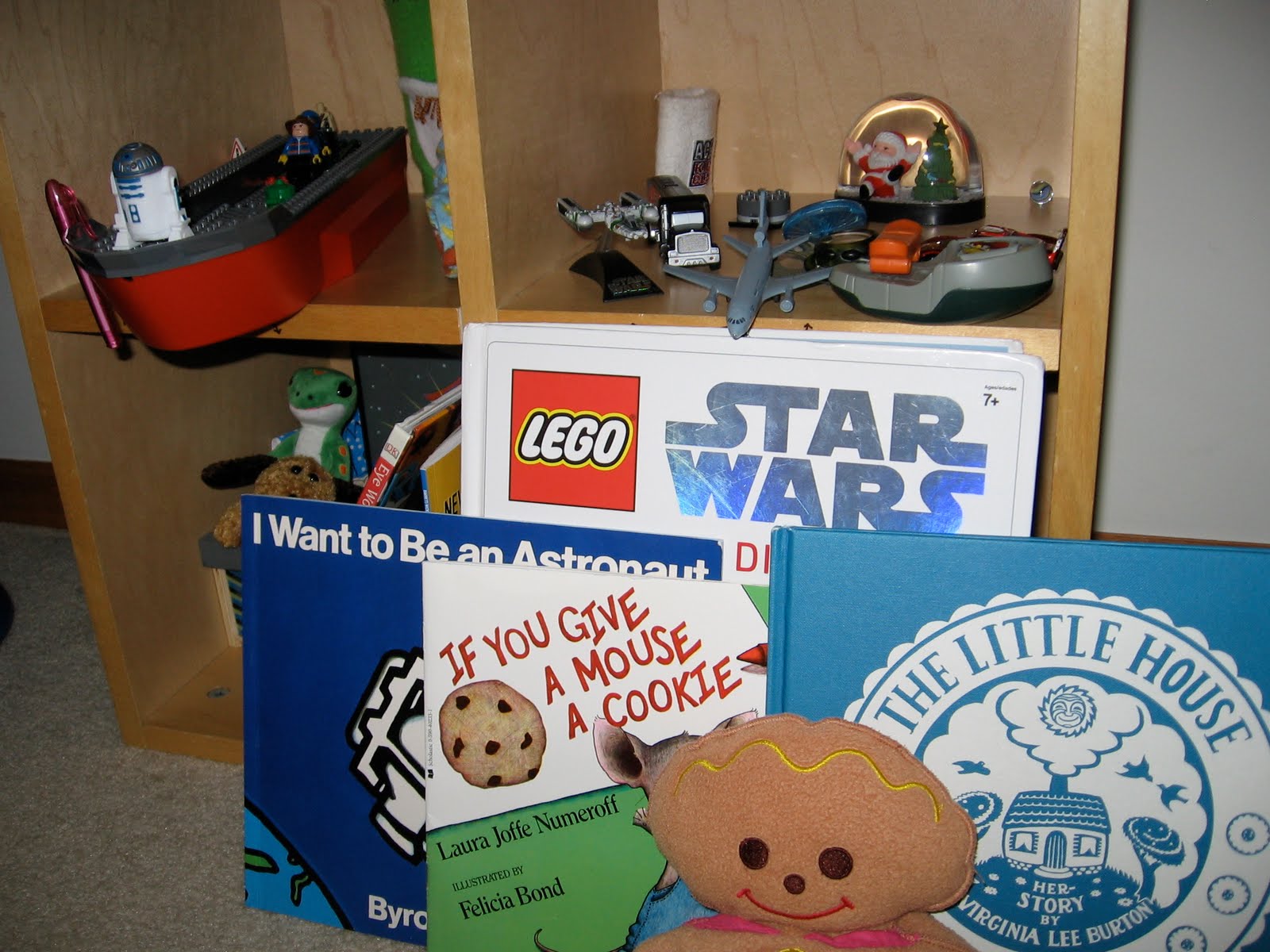
Springtime allergy season is upon us, and one of my twins woke up yesterday with itchy, puffy eyes. Figuring that dust doesn’t help matters, I walked into my twin sons’ shared bedroom to strip their beds for laundering (unfortunately I need such motivators to clean), and took pause at the sight of their cluttered, beloved shelf space for their precious things. They each have dedicated shelves to call their own, but suffice it to say that kindergarteners’ standards of what objects are worth saving are quite different from mine! Later on in the day, when we had time, the three of us cleared out the shelves so that they could be properly dusted, while taking stock of the items, thinning them out, and unearthing missing items buried under other things (missing library book, anyone?) Some of our favorite books were hiding in there, and the boys exclaimed with delight at all the “new” titles! Instead of putting the books back on a shelf, I purposely left them out in a pile, and soon had a room of kids (their little sister had wandered in) each with a nose in a book– what a beautiful sight!


Even as adults, our eyes tend to tire of things sitting in front of us every day– our kids are no different. Mix up your book collection periodically to continually stoke your kids’ interest in reading. Ever notice how public libraries put up seasonal or monthly displays of rotating titles? You can use this same idea in your home to keep things fresh. The idea works for toys as well. You can save money in the long run by periodically performing a run-through of your home, storing the lesser-used toys out of sight. Two months later you can reintroduce the hidden toys, which will have a newfound “it” status– no need to buy new toys.


(Please note: the above photo is the "after" picture!)


Wednesday, March 10, 2010

$2 to Boost Reading Skills


Learning to read is a process, and it starts when your babies gnaw on their first board books. Add time and encouragement, and your kids will grow into confident readers who get absorbed in the plot of a chapter book. Surrounding your children with words (of both the spoken and written varieties) is key towards boosting literacy skills and nurturing a lifetime love of reading.


Each of your twins is an individual, and will develop reading skills at his or her own unique pace. Do not be surprised when one seems to “take off” reading more quickly than the other. Over the years we’ve read to each of our twins one-on-one as often as possible, so as to work at each boy’s pace and comfort level, without his co-twin interrupting the experience. Our days are busy though, and despite reading every night at bedtime and during daytime opportunities, I’m always looking for more ways to incorporate words and reading into our weekly routine.


I recently found a wonderful little chalkboard at our local craft store for about $2. It is simple, only measures about 7 by 8 inches, and was easy to stick up in a corner of the kitchen with some of those snazzy, double-sided, removable picture hanging strips. The strips stay together with Velcro, so I can take the chalkboard up and down every day. We started out writing kindergarten “sight words” on the board, but lately we’ve been writing the dinner menu on it– “the special of the day,” as it were. The kids get a kick out of writing the menu themselves, making the board a fun way to reinforce writing skills as well. How fabulous to get such mileage out of $2!


Thursday, June 25, 2009

The Boring Stuff


It is rare to find good parenting philosophies reflected in modern movies– but lo and behold, Pixar’s summer release Up richly illustrates some wonderful messages.


At one point, Russell, an eager and well-intentioned 8 year-old, tells his new friend about a favorite activity he loved to share with his father.  They’d get ice cream cones, sit together on a curb, and watch the cars drive past on the street.  Russell would count the red cars, his dad would count the blue cars, and whoever got the highest number won the game.


After Russell describes this game, he sheepishly adds, “It may seem boring to you, but the boring stuff is what I remember most.”  Sitting in that dark movie theater, all I could think was “Amen!”


These summer months, don't stress yourself out planning expensive or elaborate outings with your family.  With twins or more, you have a lot on your plate.  Keep family plans simple, and focus on meaningful interactions with your kids.  Bike rides, watching the clouds go by, and reading under a tree are all free activities that are anything but boring, especially when shared with your children.


Monday, March 23, 2009

The Best Things In Life are Free [or $2.99 at Your Local Office Supply Store]


This afternoon, I was able to snag some quality time with my 5-year-old twin boys [their little sister was napping and their older brother wasn’t home from school yet]. We had fun with a calculator, of all things!

One of the boys happened to pick up a calculator from my desk, and we played a spontaneous 'game' where the boys would take turns entering random numbers into the calculator. I then translated the numbers into words––56937485 read aloud as “Fifty six million, nine hundred thirty seven thousand, four hundred and eighty five,” for example. You wouldn’t believe the boisterous giggles from the boys as I read the lengthy numbers to them!

Therein lies the beauty of a child’s mind. Whereas grownups see a calculator and think of math classes back in high school or worse, taxes, a 5-year-old sees a fun game of pressing buttons and hearing the ridiculously large numbers he has created.

Homemade, ‘invented’ games are great entertainment; challenge yourself to come up with a few of your own games this week. My boys are particularly fascinated by large numbers this month, so I am taking advantage of their natural curiosity and working in some educational diversion at the same time. Twist your toddlers’ and preschoolers’ current interests into fun, spontaneous moments. [And don’t forget to turn off the TV and put away the cell phone while you’re at it.] Kids don’t need theme parks or expensive toys to be happy. Quality time with a parent, and perhaps a small investment from the office supply store, is all kids need––great for the budget of a family with twins or more.